





















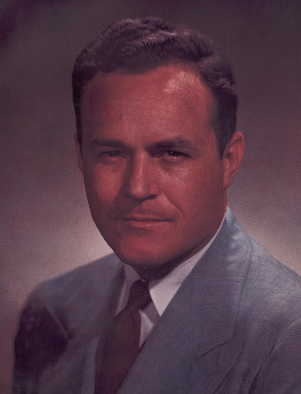





René Guénon, a renowned metaphysician and author, was the founder of the Traditionalist School of Thought—yet even to this day, his work still cuts deeper than that of any other in his field. Guénon’s The Crisis of the Modern World, published in 1927, feels surprisingly relevant for a book written almost a century ago. Guénon believed that modern civilization has lost touch with something essential, its connection to deeper, spiritual truth. He argued that while humanity has advanced in science, technology, and current comforts, it has forgotten the purpose behind all that progress. Reading his work today, it’s hard not to see how many of his warnings still echo our world. His critique does not read like a relic of the past but a mirror held up to our current age of noise, novelty, and nihilism.
Guénon often described our era as the Kali Yuga, or “dark age,” a term borrowed from Hindu cosmology that symbolizes the final stage of the world cycle, marked by spiritual decay, moral confusion, loss of virtue, and obsession with material want. To him, the modern world’s crisis was not just political or cultural, but metaphysical: a civilization that had forgotten its divine origin was bound to lose its sense of direction. In the opening of The Crisis of the Modern World, he writes that we are “living in the end of a cycle,” where “darkness is everywhere spread” (Crisis 7). This idea of cyclical decline supports his critique that our problems are not new inventions but the predictable symptoms of a world cut off from higher truth.
Guénon’s main argument is that the modern world has traded meaning for motion. We are constantly producing, consuming, and innovating, yet we rarely stop to ask why. Earlier societies, he believed, were guided by a sense of sacred principles that connected daily life to something higher. Modern society, in contrast, often measures value in terms of speed: how much we earn, how quickly we can grow, and how much online social traction we gain; we are obsessed with doing, rarely with being. Guénon warned that this obsession with quantity over quality would lead to confusion, emptiness, and loss of direction. He wrote, “Quantity cannot by itself produce anything of a truly essential order” (Crisis 42), a reminder that endless progress without purpose becomes its own form of decay.
That decay is visible everywhere today, and we rush from one innovation to another, celebrating each new technological breakthrough as if it were a revelation, while growing less capable of wonder or gratitude. A new phone, a new app, a new distraction, each promises connection, yet leaves us feeling strangely hollow. Guénon helps us see why: when the soul is starved of meaning, no amount of progress can fill the void. Our civilization races forward like a machine without a driver, almost as if it spins faster each year, yet remains unsure of its destination. It’s not that motion itself is bad, but that motion without moral or metaphysical direction is like a compass without a north.
Even if some of his ideas may seem strict or outdated, there’s a clear truth in his message. Today’s world is overflowing with information but starved for wisdom. Social media surrounds us with constant updates, but little understanding. Technology connects us instantly, yet many people feel more isolated than ever. Guénon helps explain why: without a sense of higher purpose, progress can easily become aimless. He wrote that modern civilization “develops in a sense that is purely material, instead of being directed from above and animated by principles of a higher order” (Crisis 18). That description, written in the 1920s, could just as easily describe our digital age. We possess knowledge without context, speed without stability, and comfort without contentment.
Guénon believed that the answer lay in rediscovering “tradition,” not in the sense of clinging to the past, but in reconnecting with timeless principles shared by the world’s great spiritual traditions. He believed that truth was not something humans invented, but something eternal that we rediscover and live by. Whether or not we agree, his point challenges us to think about the foundation of our beliefs: if everything is relative, can anything in life truly be meaningful?
In our democratic culture, where every opinion is treated as equally valid, Guénon’s critique strikes at the foundation of modern thought. He warned that this ideal, though noble in intention, can degenerate into confusion when it refuses to recognize the hierarchy of life and truth. When all ideas are seen as equal, wisdom and ignorance are held at the same level, and “error no longer appears as such, but merely another form of truth” (Crisis 39). This, Guénon argued, is not real freedom of thought but the dissolution of thought itself. We begin to live not by discernment, but by indulgence—accepting everything; therefore, believing in nothing. In this flattening of values, the mind loses its sense of direction. We become, in his words, “creatures of the moment” (Crisis 51), unable to stand long enough to ask the larger questions: what is good? What is true? What is worth living for?
What makes The Crisis of the Modern World worth reading isn’t just its critique of today’s novel life, but the questions it raises about how we live. Guénon doesn’t argue against science or even progress; he simply reminds us that we should serve something greater than ourselves. His writing urges us to slow down, to reflect on our priorities, and to consider whether the constant pursuit of “more” has brought us closer to real understanding—or only made us restless.
As many others and I feel about the times of today, life is ever progressing, pushing one along from education to eventually work. Yet, many cannot find the reason why. People are left adrift, floating along without the guidelines that previously gave them direction towards purpose. In an age defined by noise, speed, and distraction, Guénon‘s work offers a quiet but powerful reminder: progress without purpose is emptiness in disguise. A society that forgets its spiritual and cultural roots may gain the world, but lose its soul.
(All quotes are gathered from The Crisis of the Modern World, written by René Guénon and published in 1927).