





























“For Thou hast made us for Thyself and our hearts are restless till they rest in Thee” is arguably one of the most profound lines that epitomizes the core of Christian philosophy regarding the nature of human existence and purpose. In Confessions, St. Augustine reflects on his own life as he grapples with both the nature of God and the nature of human existence. At the heart of his journey lies an unceasing thirst for the true, the good, and the beautiful: a longing that awakens him to the mystery of God’s nature, one that cannot be contained or fully embraced.
Because God is infinite and mysterious, Augustine is drawn to question the nature of time itself—the past, the present, and the future—ultimately recognizing that God is not bound by time. For God, there is no past or future, but rather an eternal now. Yet, out of His inexhaustible love, God chooses to reveal Himself to humanity within time. This act of self-giving love becomes transformative: Augustine elucidates that it reorders a person’s desires, reshapes one’s goals, and redirects the search for fulfillment, allowing the restless heart to find true freedom and rest.
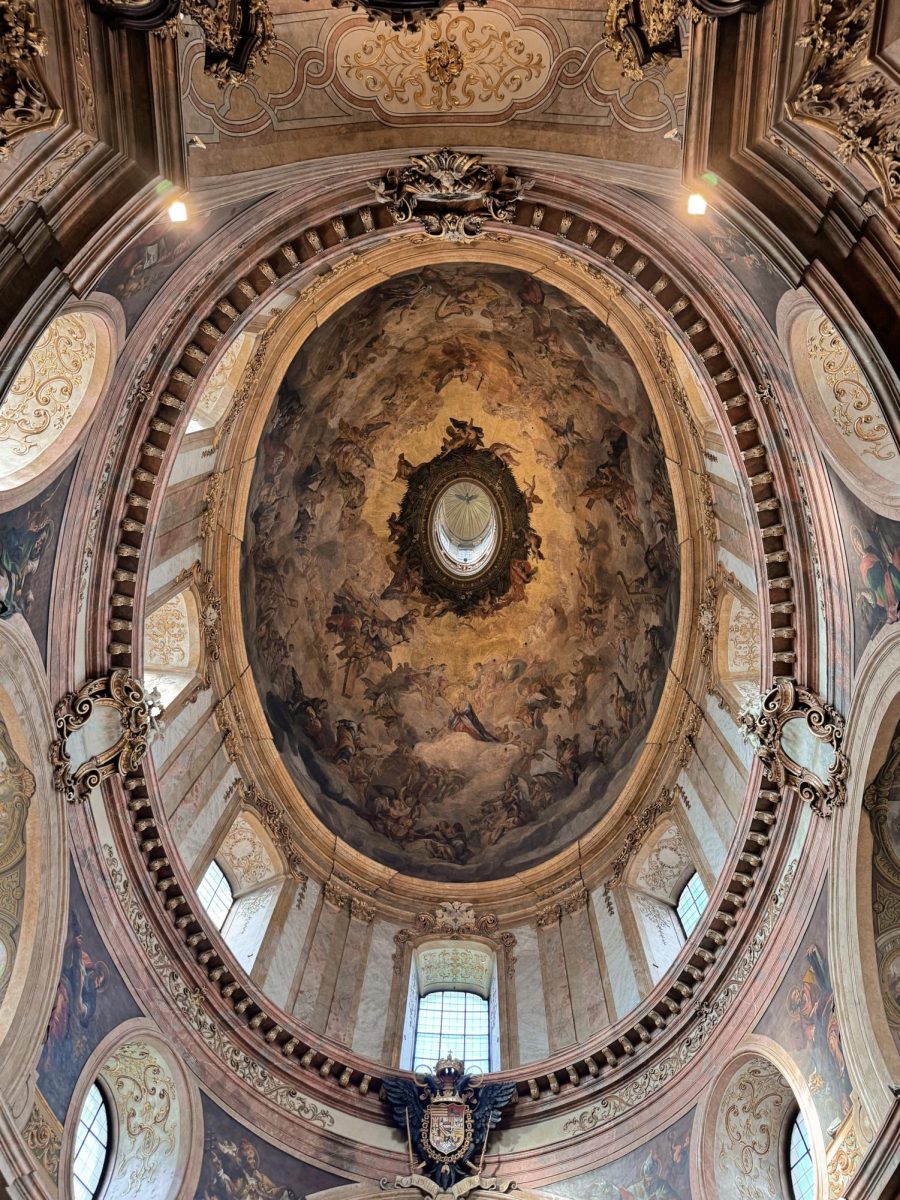
Standing beneath St. Peter’s Cathedral ceiling, the restlessness Augustine describes becomes a familiar yearning: one that quietly draws the viewer into a sense of smallness while simultaneously awakening an awareness of a greater being that the soul deeply seeks. In this way, Augustine’s reflections from nearly 1,600 years ago continue to guide one in learning how to dwell with restlessness, recognizing it not as an affliction to be extinguished, but as an inherent longing that subtly draws the soul’s gaze upward.

Anna • Jan 25, 2026 at 11:40 am
I love this
Zoku • Jan 24, 2026 at 9:44 pm
Oh wow, remarkable thinking and excellent picture xx
Luke • Jan 24, 2026 at 9:22 pm
Beautifully written!
Sam • Jan 24, 2026 at 9:19 pm
Very insightful!! Great work