





























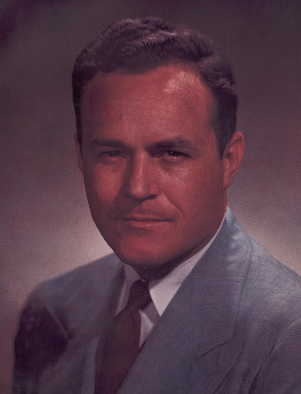




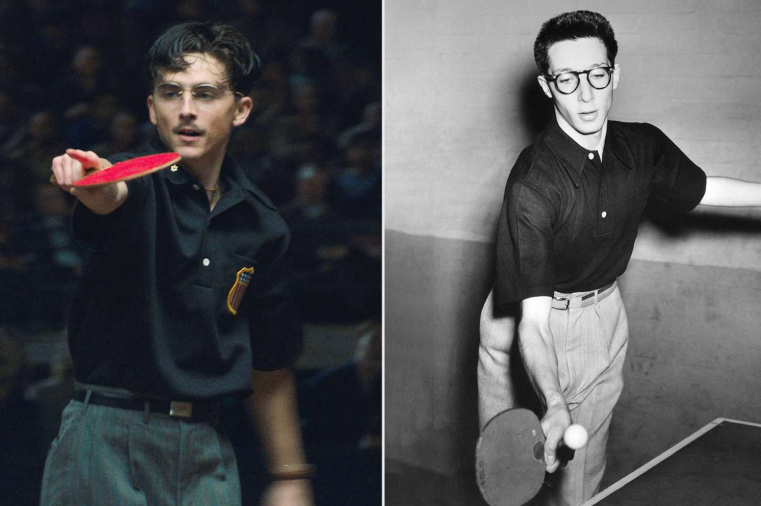
Josh Safdie’s exhilarating new film “Marty Supreme” follows the story of table tennis hustler Marty Mauser on his journey to become a world champion. Starring Timothee Chalamet, the movie has proved to be a massive box office success, raking in 28.3 million dollars on opening weekend alone. Interestingly, the character of Marty Mauser draws loosely from the life of real-life table tennis legend Marty Reisman, whose memoir, The Money Player: The Confessions of America’s Greatest Table Tennis Champion and Hustler, inspired the Safdie film. So, who was Marty Reisman?
Son of a gambler and waitress during the Great Depression, Marty Reisman’s childhood in Manhattan’s Lower East Side was anything but glamorous. Frequently, young Reisman suffered panic attacks, leading to prolonged time spent in mental health facilities. It was there that he picked up table tennis as a pastime to relieve his anxiety. Soon enough, Reisman realized that his niche hobby could be harnessed to make a living.
Known on the city streets as the “Ping Pong Hustler” and the “Money Player,” Reisman hustled businessmen and gambled without fear, moving effortlessly from back rooms to some of New York’s finest clubs. According to The New York Times’ Matt Flegenheimer, Reisman made a habit of measuring the height of the net before matches with 100-dollar bills to “ensure precision.” He effortlessly toppled American moguls such as Oscar-nominated actor Montgomery Clift, and by just sixteen, he had become a dominant force on the underground circuit, his reputation echoing across the city.
One of the vital aspects of ‘Marty Supreme’ is Marty’s persona. While the film is loosely based on Reisman, one trait it depicts accurately is Reisman’s psychological approach to the game: Often, he would come across as unthreatening and “lure” his opponents into a false sense of security, allowing them to win the first few rounds. Then, after convincing them to raise the stakes and bet more money, he would defeat them effortlessly. By perfecting his craft through undeniable charisma and masterclass trick shots, Reisman cashed in hundreds of dollars per night.
At the mere age of 18, Reisman was selected to represent Team USA in the 1948 Stockholm World Championships. As he traveled across Europe, he took every opportunity to earn extra cash; he smuggled in American lingerie and pens, selling them to Europeans while on tour. Between 1948 and 1952, Reisman won five bronze medals at world championships and was most successful in 1949, when he won gold in the English Open against 5-times world champion Viktor Barna. Yet, the hustler in him never ceased: He was temporarily banned from playing for Team USA after demanding luxury hotels and spending an “exorbitant” amount of money on room service, violating the English Table Tennis Association’s code of conduct.
Following his win in the English Open and his suspension, Reisman spent three years touring with the Harlem Globetrotters. During halftime shows, he showcased gimmick moves such as breaking a cigarette in two with a slam, juggling five balls at once, and using pots and pans to play “Mary Had A Little Lamb.” When Reisman returned to competing, he faced off against the trailblazing Japanese player Hirohi Sato during the men’s singles at the World Championships. His tragic loss altered the trajectory of the game forever: Sato won using the first-ever foam rubber bat, a stark departure from the traditional hardbat Reisman cherished. Sato’s technique swept across the Eastern Hemisphere, leaving both the United States and Reisman behind.
Despite falling out of the competitive game in the late 1950s, Reisman’s love for the sport endured through the purchase of the Riverside Table Tennis Club. After several years of recreational play, he won the United States Hardbat Championship at age sixty-seven, defeating players decades younger.
While a stellar player, Reisman didn’t become an icon solely because of his skill. According to professional player Khaleel Asgharali, who often watched Reisman compete during his youth, “The way [Reisman] carried himself, his charisma, his flair, [his] personality, made him legendary.”
If we take anything from Marty Reisman’s story, let it be the importance of embracing intrinsic greatness. Beyond the flashy suits and dynamo lifestyle, Reisman was a man who dedicated his life to achieving excellence in the game he loved, building a better life for himself than the one into which he was born. He did so by his own rules, leaving behind an unforgettable legacy that encourages audiences to dream big and act boldly in the pursuit of personal success. For that, he remains a legend in my book.
Sources